AUSTRIA
Classic High School Exchange Programs
Austria is one of our smallest exchange destinations, and one of our longest running. Students spend the year in a German-speaking gymnasium, live with a warmly welcoming host family, and get to know a country built around family time, the outdoors and a deep love of music and the arts. Because the program is small, the students on it tend to know each other well, and many meet up on trips organised through the local coordinator team throughout the year.
Austria runs on a Classic High School program only, with intakes in the fall. Program prices, inclusions and additional fees are available on the Austria Price Page.
Quick facts
Age of students: 15–17.5 years (can turn 18 during exchange)
Departure: September
Visa: Required for non-EU students over 3 months
Area choice: No
School day: Normally from 8.00 to 14.00
Welcome Camp: Yes, available for September arrivals only for an additional fee
Subjects: There are both compulsory subjects and electives
Program: Classic High School Academic Semester & Year, Classic 2-3 Month Short Programs


Why choose AUSTRIA?
Austria pairs a high standard of schooling with an unhurried, family-centred way of life. Students who commit to the language leave as confident German speakers, and the compact size of the program means every student is known personally by the local coordinator team – many of whom have been running the program for decades.
Beyond the classroom, Austria’s landscape does a lot of the work: Alpine peaks for skiing and hiking, historic towns built around music and craft, and a culture that genuinely slows down at the weekend for family dinners and time outdoors.
learn more at an upcoming info session webinar
AUSTRIA program information
About high school in Austria
Austrian schooling is split into Primary school (roughly ages 6/7 to 10/11) and High school (ages 10 to 17/18). Rather than one single high-school model, Austria offers a range of specialised gymnasiums – some oriented around sport, others around music, science, economics, tourism, handicraft, or agriculture – so the flavour of the school day can vary a lot from town to town.
Most exchange students are placed in year 10 or 11, depending on their age and level of German. Timetables are handed out at the start of the school year, and the school week runs Monday to Friday, generally from just before 8am until around 2pm.
Enquire now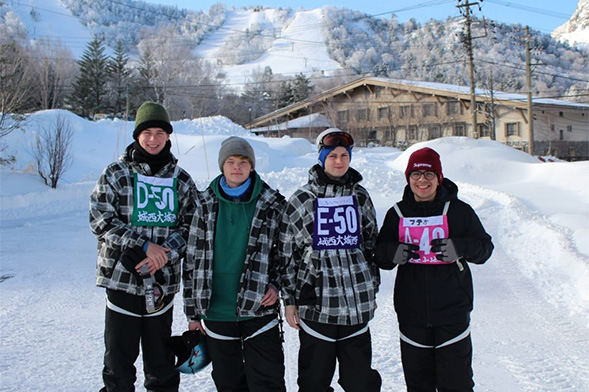
Subjects and school activities
Core subjects include German, English (often alongside a second foreign language), maths, science (biology, chemistry, physics), social studies (history, geography), art, religion, and PE. Depending on the school, additional languages on offer can include Latin, French, Spanish, Italian, Ancient Greek and Russian — though the choice of language is usually locked in as early as grade 7, or as late as grade 9 or 10, so it isn’t something an exchange student can pick up fresh.
Homework is a normal part of the week and can be fairly demanding. Schools don’t organise their own after-school activities, but there’s plenty on offer through local clubs and community groups instead.
Enquire now.jpg)
Your spare time in Austria
What you do outside school is very much community-driven rather than school-run. Alpine and cross-country skiing, snowboarding, ice hockey and ice skating are all popular through the colder months, alongside climbing, hiking, tennis, swimming and athletics year-round.
Austria also has a strong pull toward music, theatre and local cultural events – going to a concert, a play, or even a formal ball is a genuinely normal weekend activity here, not a special occasion.
Enquire now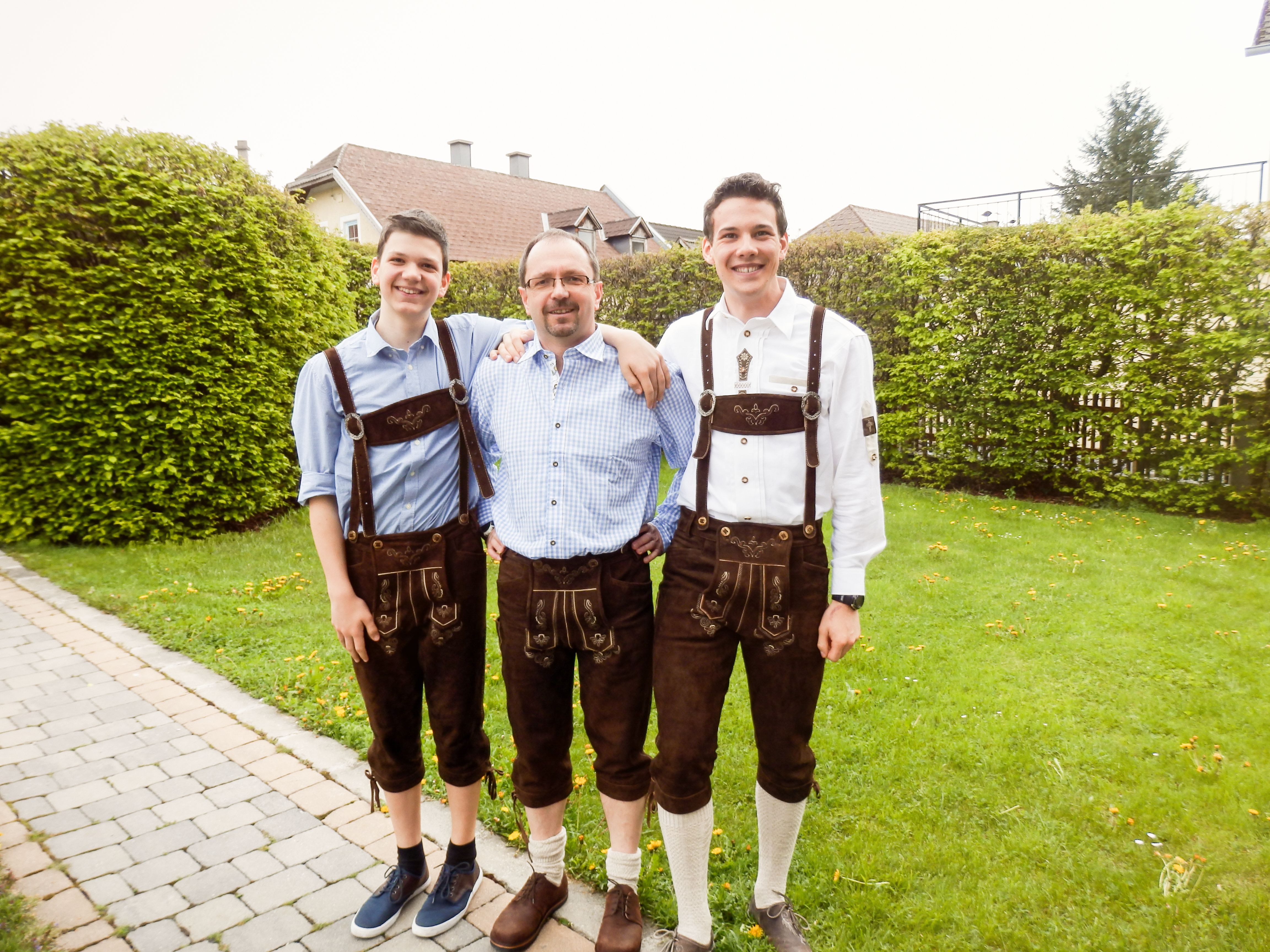
Staying with an Austrian host family
Host families across Austria receive a small stipend and are spread nationwide. Rural placements are quite common, so don’t expect to be placed in Vienna by default. Families come in every shape: couples, single parents, families with young kids or teenagers, and households from a range of ethnic, cultural and religious backgrounds.
Family life, politeness and a real connection to nature and the arts run through Austrian culture. Despite a reputation for formality, Austrian families also value warmth and coziness at home, and Sundays especially tend to be kept for family time.
Learn about host familiesSeptember Arrivals
Austria-bound students can join a four-day Welcome Camp in Vienna before heading to their host family. It’s designed as a soft landing: a chance to meet fellow exchange students, get orientated to Austrian life, and see a little of the capital before the year properly begins.
Day 1 covers arrival and a meet-and-greet with the rest of the group over dinner. Day 2 pairs a “get to know Austria” workshop with sightseeing around the city, and day 3 is a full day of guided sightseeing. On day 4, students have breakfast before departing for their host families, with staff on hand to help arrange onward travel.
Austria does not currently offer a spring Welcome Camp. It runs for September arrivals only, for additional fee.
Price Austria.jpg)
About high school in Austria
Austrian schooling is split into Primary school (roughly ages 6/7 to 10/11) and High school (ages 10 to 17/18). Rather than one single high-school model, Austria offers a range of specialised gymnasiums – some oriented around sport, others around music, science, economics, tourism, handicraft, or agriculture – so the flavour of the school day can vary a lot from town to town.
Most exchange students are placed in year 10 or 11, depending on their age and level of German. Timetables are handed out at the start of the school year, and the school week runs Monday to Friday, generally from just before 8am until around 2pm.
Subjects and school activities
Core subjects include German, English (often alongside a second foreign language), maths, science (biology, chemistry, physics), social studies (history, geography), art, religion, and PE. Depending on the school, additional languages on offer can include Latin, French, Spanish, Italian, Ancient Greek and Russian — though the choice of language is usually locked in as early as grade 7, or as late as grade 9 or 10, so it isn’t something an exchange student can pick up fresh.
Homework is a normal part of the week and can be fairly demanding. Schools don’t organise their own after-school activities, but there’s plenty on offer through local clubs and community groups instead.
Your spare time in Austria
What you do outside school is very much community-driven rather than school-run. Alpine and cross-country skiing, snowboarding, ice hockey and ice skating are all popular through the colder months, alongside climbing, hiking, tennis, swimming and athletics year-round.
Austria also has a strong pull toward music, theatre and local cultural events – going to a concert, a play, or even a formal ball is a genuinely normal weekend activity here, not a special occasion.
Staying with an Austrian host family
Host families across Austria receive a small stipend and are spread nationwide. Rural placements are quite common, so don’t expect to be placed in Vienna by default. Families come in every shape: couples, single parents, families with young kids or teenagers, and households from a range of ethnic, cultural and religious backgrounds.
Family life, politeness and a real connection to nature and the arts run through Austrian culture. Despite a reputation for formality, Austrian families also value warmth and coziness at home, and Sundays especially tend to be kept for family time.
September Arrivals
Austria-bound students can join a four-day Welcome Camp in Vienna before heading to their host family. It’s designed as a soft landing: a chance to meet fellow exchange students, get orientated to Austrian life, and see a little of the capital before the year properly begins.
Day 1 covers arrival and a meet-and-greet with the rest of the group over dinner. Day 2 pairs a “get to know Austria” workshop with sightseeing around the city, and day 3 is a full day of guided sightseeing. On day 4, students have breakfast before departing for their host families, with staff on hand to help arrange onward travel.
Austria does not currently offer a spring Welcome Camp. It runs for September arrivals only, for additional fee.


Hear from our exchange students

Chelsea
“I loved my exchange!
It was such an eye opening experience and I hope I keep the friendships and memories with me forever!“
– Chelsea

Jessica
“It’s good to talk to your teachers when something confuses you or makes you feel uncomfortable or overwhelmed because they are there to help you.“
– Jessica
Check out our socials